The crimes outlined in articles 359-M and 359-L of the Penal Code, as analyzed by Raquel Scalcon, reveal essential interpretative challenges to the protection of democratic institutions.

The crimes outlined in articles 359-M and 359-L of the Penal Code, as analyzed by Raquel Scalcon, reveal essential interpretative challenges to the protection of democratic institutions.
This article is a continuation of the discussion on the topic of multiple offenses in the context of the charges against former President Jair Bolsonaro. In this second text, Raquel examines possible connections between the crime of aggravated damage and the crime of deterioration of listed heritage sites.
Raquel Scalcon’s article addresses the complex issue of multiple offenses in the context of the charges against Bolsonaro and others.
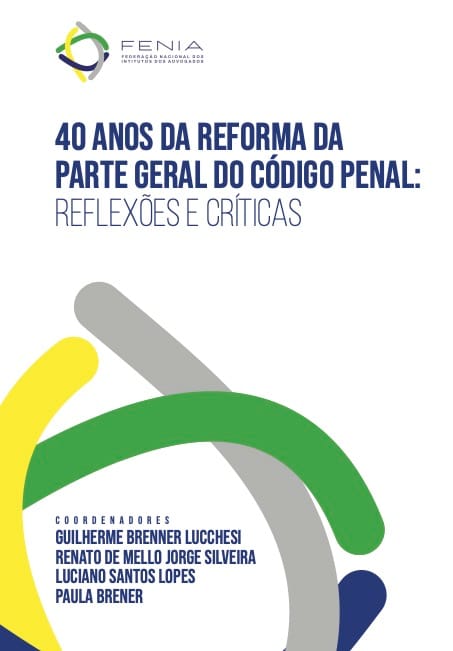
Discussions surrounding the error of prohibition, since its inclusion in the Penal Code in 1984.
on the Judicial Examination of the Objective Type of the Crime of Illegal Dispense or Non-Requeriment of Bidding (art. 89, Law 8.666 /93) and of the New Crime of Illegal Direct Public Procurement
Article about the physician and their qualification as public official for criminal purposes in “Medical Criminal Law”, organized by Flávia Siqueira and Heloisa Estellita.
Raquel Scalcon argues for the importance of Legal Theory in guaranteeing rights and preventing state abuses during epidemics such as COVID-19.
This article originates from questions that arose during Raquel Scalcon’s doctoral thesis research: Constitutional control of criminal laws (2018).
Raquel Scalcon reflects on the “Candango” case (Brazil) and the “Regina Pacis” case (Italy). The Third Sector and the Crime of Embezzlement.
Raquel Scalcon analyzes the problems encountered during the application of article 327 of the Penal Code to specific cases.
A narrow interpretation of what constitutes government employment at state-owned companies (Article 327, main section, Criminal Doce – CC). Government official. Article by Raquel Scalcon.
This essay will analyze the possible relations between the rationality of the legislative process and the constitutionality of a new law.
European practice and its lessons for Brazil. Raquel Scalcon investigates the use of ex ante and ex post evaluation mechanisms in the legislative process.
Fábio Roberto D’Ávila and Raquel Lima Scalcon discuss the intersections between Constitutional Law and Criminal Law, based on the decisive contribution of Ingo Sarlet.

Concept, distinctions, and cases. Discussions that demonstrate the lack of obviousness in the interpretation of article 327 of the Penal Code. Criminal Law.
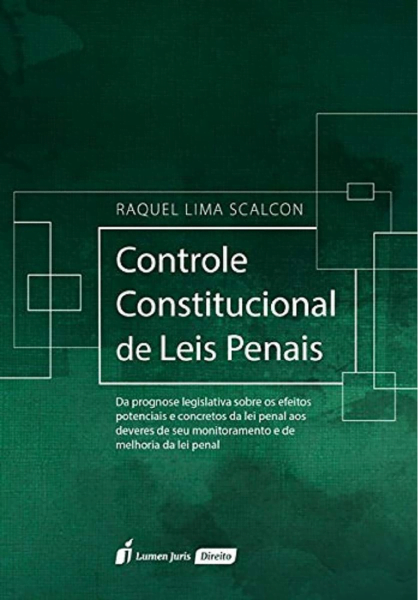
From legislative forecasts on the potential and concrete effects of criminal law to the duties of monitoring and improving criminal law. Constitutional Law.
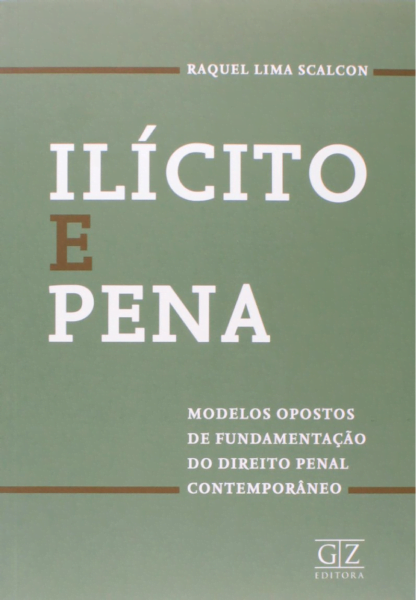
Opposing models for the foundation of contemporary Criminal Law. The importance of the notions of unlawfulness and punishment. Claus Rozin and José de Faria Costa.
The page you requested could not be found. Try refining your search, or use the navigation above to locate the post.