According to Raquel Scalcon, neither the Code of Criminal Procedure nor the Supreme Court’s rules require a qualified dissenting opinion, a gap filled by the justices based on the logic of proportionality.
According to Raquel Scalcon, neither the Code of Criminal Procedure nor the Supreme Court’s rules require a qualified dissenting opinion, a gap filled by the justices based on the logic of proportionality.
After five years of the non-prosecution agreement (ANPP) being in effect, Raquel Scalcon points out the practical problems of the law and proposes that negotiated justice be improved.

Lawyer and criminal law professor Raquel Scalcon sees no logic in altering the severity of the penalties for the crimes themselves in the Penal Code, pointing out that they are not high.
According to Raquel Scalcon, most ministers, as well as the Attorney General’s Office, adopted a broader interpretation of violence and serious threats than that traditionally used in legislation.
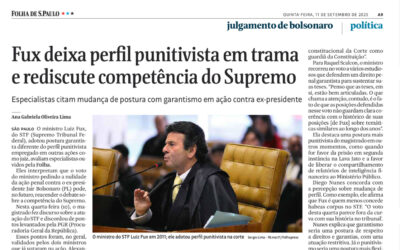
Raquel Scalcon states that the Supreme Court’s understanding of jurisdiction is not expected to change at this time, given the court’s current composition.

Raquel Scalcon characterizes the limits of the decision as unclear, leaving room for later interpretation of what violates it or not.


